
Here are the benefits that you can get if you use a household cool air purifier in Singapore:
Our Products
Air Purifiers in Singapore
Breathe in 100% pure freshness with our advanced cool air purifiers that remove pollutants for clean, healthy indoor air. Trust in HEPA 14 filtration technology to safeguard your family’s health and well-being!
Stay Healthy with Happie Air Purifiers in Singapore
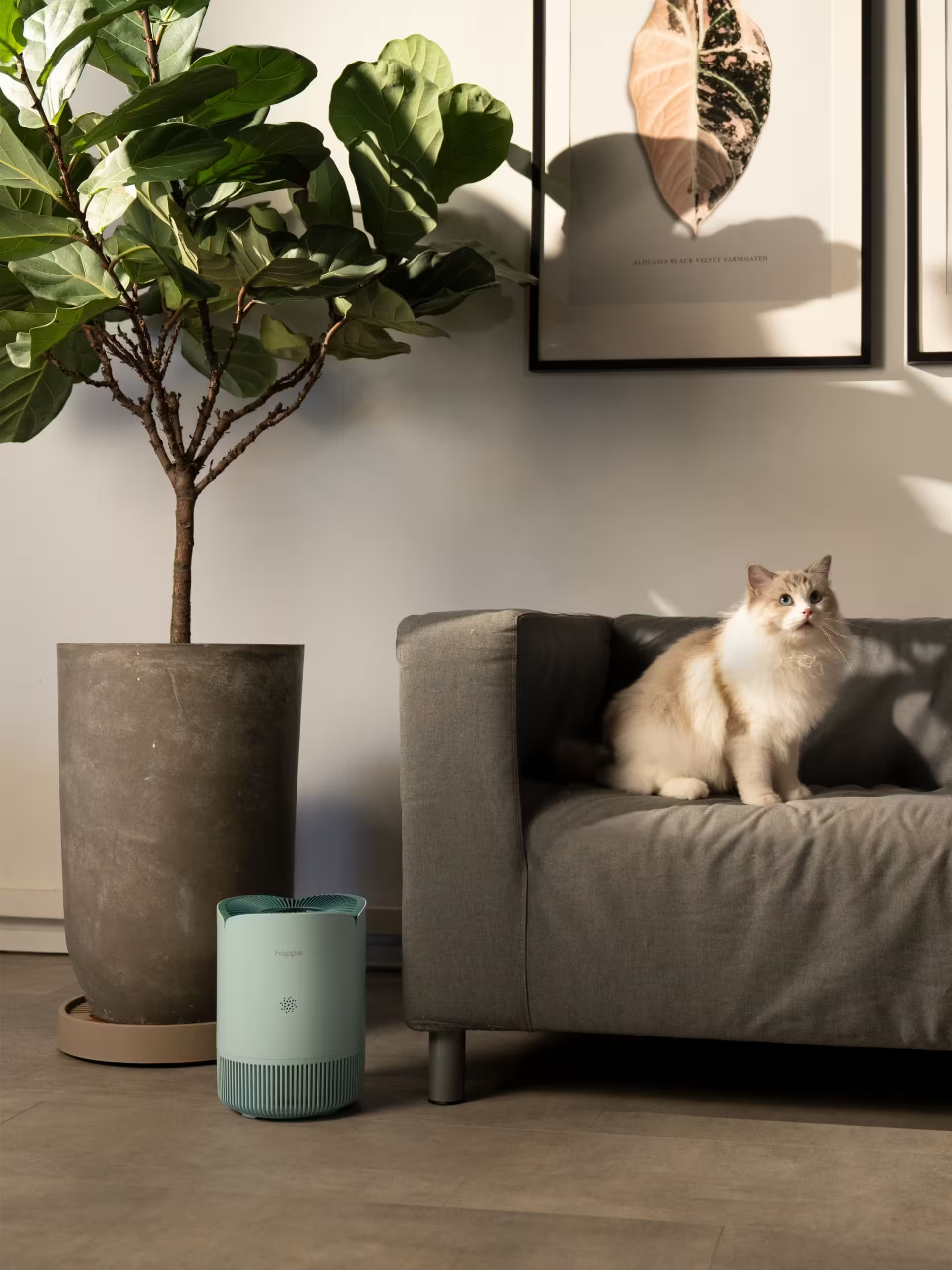
Breathe cleaner, fresher air with Happie’s HEPA 14 water air purifiers. Designed to capture 99.995% of airborne particles—including dust, allergens, and pollutants—our purifiers create a safer, healthier indoor environment for you and your family.
Whether for your home or office, Happie offers reliable air purification solutions that combine advanced technology with sleek design. Discover the perfect fit for your space and enjoy peace of mind with cleaner air, every day.
In Singapore, air quality can fluctuate due to haze, high humidity, and urban pollution. A reliable water air purifier is essential to safeguard your family’s health. It ensures every breath you take is cleaner and safer. A high-quality purifier does more than just freshen the air—it targets bacteria, viruses, allergens, and harmful fine particles that may be circulating indoors.
Whether you’re looking for a compact purifier for the bedroom or a more advanced setup for larger spaces, modern systems can meet different needs without taking up much room.
Modern air cleaners and purifiers offer ease of use. With straightforward setup and low maintenance needed, you can enjoy fresh, purified air with minimal hassle. Many models are equipped with smart sensors, filter indicators, and multi-stage HEPA filtration that effectively remove dust, pollen, smoke, and even microscopic pollutants.
What is the purpose of an Air Filtration System?
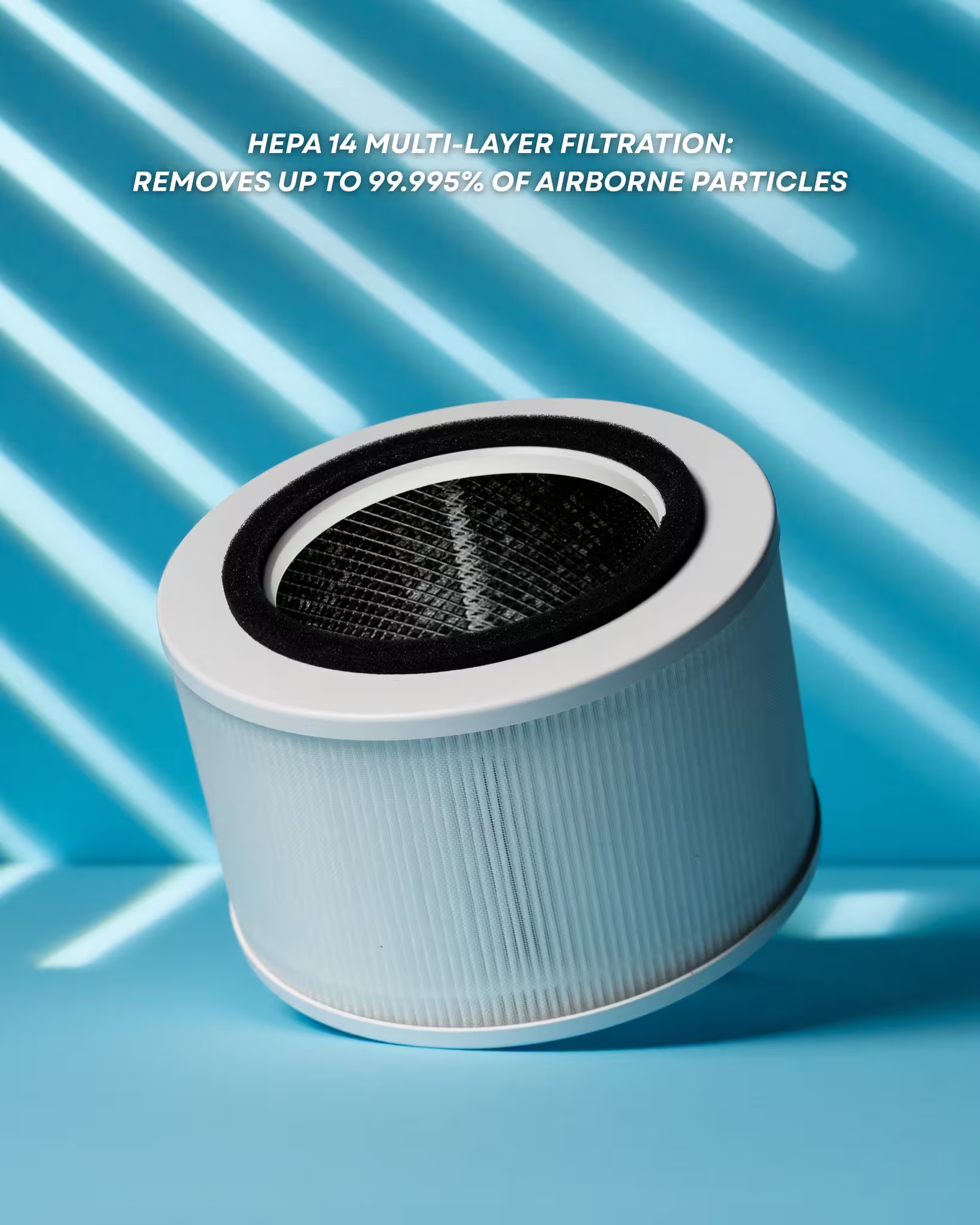
Air filtration systems are designed to capture, contain, and remove harmful airborne particles from indoor environments. These particles include dust, smoke, pollen, and bacteria. High-efficiency filters, such as HEPA-14, can trap up to 99.995% of these pollutants. This makes breathing easier and reduces issues like sneezing, coughing, or dry throat. Our air purification systems work continuously to keep your air clean, and your loved ones protected.
Benefits of Having an Air Purifier
Cleaner Air
01
Removes dust, allergens, and pollutants.
Healthier Breathing
02
Reduces risks of asthma and allergies.
Odour Control
03
Eliminates smoke, pet, and cooking smells.
Germ Protection
05
Filters bacteria and viruses in the air.
Improved Comfort
06
Creates a fresher, healthier home environment.
Better Sleep
07
Quietly cleanse the air without disturbing your sleep.
Features of our Air Purification and Filtration System
True HEPA-14 Filter
Effectively removes 99.995% of airborne particles, including dust, pollen, smoke, and allergens.
Multi-Stage Purification System
Layers of filters work together to capture pollutants, odours, and harmful particles for cleaner air.
Ultra-Quiet Operation
Runs as low as 20dB, making it suitable for bedrooms, nurseries, or study rooms without disturbance.
Energy-Saving Sleep Mode
Automatically reduces noise and power consumption while maintaining fresh, clean air as you rest.
Filter Replacement Indicator
Built-in reminder ensures timely filter changes, so your purifier always performs at its best.
Compact Yet Powerful Design
Small footprint with wide coverage, fitting seamlessly into any home without taking up much space.
Why choose our Air Purifiers
Professional Setups for Any Space
We do more than simply place a unit in your room. We assess, measure, and recommend the most suitable system based on your needs.
Whether for a compact bedroom or a large office, our air filtration systems are space-efficient, energy-conscious, and designed to blend seamlessly into your environment. Plus, we offer competitive air purifier prices across all product lines.
Advanced Filter & Technology
Our air purifier combine high-performance filters with intuitive controls. It senses air quality, automatically adjust performance and operate quietly when needed. You won’t have to guess when it’s time to change filters. The system will notify you. The units are easy to manage.
Pollutants are captured effectively, and clean air is delivered rapidly, making our air cleaners and purifiers a smart, lasting investment.
Fast, Local Service
Our local team is quick to respond and resolve any issues as they arise. We don’t just deliver machines—we provide continuous support.
When you choose our services, you gain a reliable partner dedicated to maintaining clean air in your space every day.
Clean Air Without Clutter
Our air purifiers in Singapore are compact and discreet. We place them in ways that don’t block rooms or paths.
Each system, including filtration system, runs quietly and efficiently, without clutter or disruption. We focus on clean, functional designs paired with powerful performance.
Frequently Asked Questions
What is an air purifier and how does it work?
An air purifier is a device that removes pollutants, allergens, dust, and odors from indoor air. It works by pulling air through filters, such as HEPA or activated carbon, trapping harmful particles and releasing cleaner air.
Do air purifiers really improve indoor air quality?
Yes — air purifiers reduce dust, pollen, pet dander, smoke, and airborne bacteria, helping improve indoor air quality and creating a healthier home environment.
Can an air purifier help with allergies or asthma?
Air purifiers with HEPA filters can trap allergens like pollen, dust mites, and pet dander, which may help reduce allergy and asthma symptoms.
How often should I run an air purifier?
For best results, run it continuously or during times when pollution or allergens are high. Most devices are designed for 24/7 operation and energy-efficient use.
What types of air filters do air purifiers use?
Common types include:
- HEPA filters – capture fine particles like dust and pollen
- Activated carbon filters – remove odors, smoke, and VOCs
- UV-C or ionizers – target bacteria and viruses
How big of a room can an air purifier clean?
Air purifiers are rated by CADR (Clean Air Delivery Rate) and room size. Choose one that matches or slightly exceeds the square footage of your room for optimal air cleaning.
Do air purifiers remove smoke and odors?
Yes — units with activated carbon filters are effective at reducing smoke, cooking smells, and other household odors.
How often should I replace air purifier filters?
Filter replacement depends on the type and usage:
- HEPA filters: usually 6–12 months
- Carbon filters: 3–6 months
- Washable pre-filters: clean every 1–2 months
- Check your device manual for exact guidance.
Are air purifiers noisy?
Most modern air purifiers operate quietly, especially on low settings. Some come with sleep modes or low-noise operation suitable for bedrooms and offices.
Can air purifiers prevent viruses and bacteria?
Air purifiers can help reduce airborne bacteria and viruses, especially those with HEPA filters and UV-C technology. They are not a replacement for vaccines or medical care, but they improve overall indoor air hygiene.
View Our Latest Google Reviews

Nur Shafawati
3 weeks ago
Suhaimi is polite personnel. He did the work with care. He did explain with clarity.

Edgar Wee
3 weeks ago
Servicing was done by Suhaimi on 021026. Very efficient and friendly staff.

Cherie Lee
3 weeks ago
Our installer, Jack, was very experienced and professional! He installed the water dispenser efficiently and workmanship was great! Installation was seamless. Took the time to explain the features to us too! Very satisfied 🙂

Sean Ang
3 weeks ago
Suhaimi is helpful guy. During changing of water filter, he also check the open up the water purifier and check.

Carine Ang
3 weeks ago
Have my regular refill done. The installer Mr Suhaimi is friendly and punctual. He is professional in his work and answering my queries. 👍

Alloiscius Tan
4 months ago
Flawless experience from start to finish! Highly recommended!!!
We recently purchased a Happie water dispenser for our new 🏡 and the entire process was absolutely seamless thanks to an incredible team.
First, a massive shout-out to their Business Development Sales Executive , Vivian Tey. She was exceptionally professional and incredibly patient with us. She took the time to answer all of our questions, explained the features thoroughly, and never made us feel rushed. Her excellent service made us completely confident in our purchase.
The top-tier service continued with the installation. Sean, our installer, did a phenomenal job. He was highly professional, efficient, neat, and took the time to ensure everything was set up perfectly and working flawlessly before he left.
If you are looking to get a Happie water dispenser, look no further. Ask for Vivian for a smooth buying experience and hope for Sean for your installation. A 10/10 experience!" ✨✨✨✨✨✨
~ Alloiscius Tan

Elsie Ong
4 months ago
Thank you Bro Sean and Sis Cheryl Teoh for the excellent service.Bro Sean’s patience in giving advice where to place the dispenser and even spare a minute to help me hung a wall deco is greatly appreciated. And thank you Cheryl for the excellent coordination in arranging the appointment, esp when I request to change the appointment to meet my Reno schedule. Thanks for the great work!

Tanner T
5 months ago
Oh wow...our First time buying a water dispenser without seeing and feeling the physical products especially first time heard of this brand. So why we bought it .. let's see:
Bought this during a TT live stream by Yiling together with Jason Peh (Happie Sales Specialist). I asked a lot of questions and both answered my queries. Coupled with Jason great customer services, friendliness and honesty, we trusted that this will be a great product to replace our curent bulkier dispenser (and constantly leaking). Color option is nice and wife chose Lavender. The pricing was good, has GWP and free filters for 4 yrs, and the best - the technician will come down to change and service it.
The installer Jack is professional, helpful and he explained thoroughly how to operate the dispenser. He did a nice job and help to rectify some "mistake" by the other brand. He also installed additional on/off valve for ease of operating.
The functions we like:
1. Nice pastel color
2. Temperature up to 100% (most in the market is up to 85)
3. Up to 1 litte volume
4. Auto-cleansing
5. Can be good for some - there is a clock on the panel

Jay Nielven
5 months ago
I’m very happy with my Happie Joy water dispenser that was recently installed in my home. The unit looks sleek, works perfectly, and the water quality has been excellent. Special thanks to Joshua for his professional and friendly service throughout the sales process, and to Sean for the smooth and efficient installation. Overall, a great experience from start to finish. Highly recommended!

Brenda Ng
5 months ago
We were very lucky to have Uncle Jack today, who helped us beautifully install our water filter from Happie! He made sure there was no mess, the water pipes were installed seamlessly and it didnt affect any storage space that I have. He also made sure that it was convenient for us for our daily use. 10/10 demo from him as well and already excited to use it every day!
Thank you Uncle Jack!
Also like to thank Danica for her service, it was fuss free and she gave me the best deal!